Wild Horse Islands gameplay revolves around a simple but surprisingly deep loop: you spawn on Pinehaven, the starter island, and immediately face the core question that drives the entire experience — which wild horse will you try to catch first? Since launching on June 22, 2021, this Roblox adventure has racked up over 659 million visits and a 92% positive rating, which tells you the formula works. The game blends horse collection, breeding, trading, and racing into a package that keeps players coming back for years, and understanding how the systems connect is the difference between wandering aimlessly and building a valuable herd.
The real hook is that Wild Horse Islands gameplay rewards patience and knowledge more than raw grinding. Knowing which islands hold rare coats, how the taming meter works, and when to sell versus breed can accelerate your progress dramatically. This guide breaks down the essential mechanics, gives you a complete controls reference, answers the free-to-play question directly, and offers an honest review of what the experience actually feels like — so you can decide whether this is the Roblox adventure for you.
Understanding the Core Wild Horse Islands Gameplay Loop
The foundation of Wild Horse Islands gameplay is a cycle that feels familiar to anyone who has played creature-collecting games, but with a distinct Roblox twist. You explore tropical islands, spot wild horses with procedurally generated coats and traits, and attempt to tame them by approaching carefully and feeding them the right treats. Once tamed, a horse becomes yours permanently, and the real progression begins through training, breeding, and trading.
The game launched with a modest set of islands, but the developer Happy Acres has expanded the map considerably over time. Each island introduces different coat possibilities and rarity tiers, which keeps the exploration fresh even after hundreds of hours. According to the official Roblox game page, the experience is tagged for Taming, Pasture, Western, English, Fantasy, Pony, Foal, and Racing — which gives you a sense of how many distinct systems are packed into one game.
A typical session starts with you loading into your chosen island and immediately checking the coat spawns that have refreshed since your last visit—rare coats like the brindle or reverse dapple only appear on a set rotation, so you'll want to memorize the spawn points on Highlands or Jungle to avoid wasting time. From there, you'll grab your lasso, track a target's speed and stamina stats before committing to a chase, and then decide whether to tame it outright or sell it for coins to fund better gear. The real rhythm kicks in once you learn to balance this loop with breeding cooldowns and the daily quest board, since those offer the most reliable XP and cash flow.
-
Scouting — You ride or fast-travel to an island known for desirable coats, scanning the spawn areas for horses with rare patterns or colors.
-
Taming — You approach a target horse slowly, watching its stress meter, and offer food until the taming bar fills completely.
-
Training — You ride your new horse to build its speed, stamina, and jumping stats through repeated use.
-
Breeding — You pair two horses with complementary traits to produce foals with better stats or rarer coats.
-
Trading — You list surplus horses or foals in the auction house to earn currency and acquire breeds you cannot find in the wild.
The beauty of this loop is that every action feeds into another. Training makes your horse more valuable for trading, trading earns money for better food and island access, and breeding gives you the rare coats that command premium prices. If you are just starting out, the new player guide covers the first hour in detail, including which starter island habits will save you the most time later.
Complete Wild Horse Islands Controls Reference
Getting the controls right is the first real skill check in Wild Horse Islands gameplay, because the game uses a mix of standard Roblox inputs and horse-specific mechanics that take some getting used to. The controls differ slightly depending on whether you are playing on PC, mobile, or console, but the core actions translate across all platforms.
The most important thing to understand is that movement while riding is not identical to movement on foot. Your horse has its own acceleration curve, turning radius, and stamina drain, so the controls feel heavier and more deliberate when mounted. This is intentional — the game wants you to feel like you are managing a living animal, not a vehicle.
Here is the full control breakdown for PC players, covering every key binding you’ll need for both land and water traversal. The WASD keys handle movement, while Shift activates a sprint that drains stamina—critical when you’re chasing down a rare coat like the Reverse Roan in the Highlands. Spacebar lets you jump over fences or onto rocks, and E is your universal interaction key for mounting, feeding, and looting. For fishing, press F to cast and G to reel in, but watch your line tension meter. Finally, Tab opens your inventory and M toggles the map, where you can track your current quest objectives and see nearby player locations.
| Action | Key / Input | Notes |
|---|---|---|
| Move (on foot) | WASD | Standard Roblox movement |
| Move (riding) | WASD | Horse accelerates gradually |
| Jump (on foot) | Spacebar | Used for climbing terrain |
| Jump (riding) | Spacebar | Horse jumps; drains stamina |
| Sprint / Gallop | Left Shift | Increases speed, drains stamina faster |
| Interact / Mount | E | Context-sensitive (feed, mount, open gates) |
| Camera | Mouse | Right-click drag to rotate |
| Zoom | Scroll wheel | Pull back for better visibility |
| Open Inventory | Tab or B | Access food, tack, and items |
| Open Map | M | Fast travel to unlocked islands |
Mobile players get an on-screen joystick and contextual buttons that appear when you are near an interactive object, while console players use the standard controller layout with the left stick for movement and face buttons for actions. The mobile controls guide has platform-specific tips if you are playing on a phone or tablet.
One control quirk that trips up new players is the taming interaction. When you approach a wild horse, you do not just press E and instantly tame it — you must hold the interact button while feeding treats, and the horse can bolt if you move too quickly or run out of food mid-tame. This creates a tense minigame where positioning and inventory management matter just as much as reaction speed.
Is Wild Horse Islands Free to Play?
The short answer is yes — Wild Horse Islands is completely free to play, and you can access the full core experience without spending a single Robux. The game follows the standard Roblox monetization model where the base game costs nothing, but optional purchases exist for players who want to accelerate progress or customize their herd.
That said, "free to play" comes with some caveats that are worth understanding before you invest hours into the game. The free experience is genuinely complete — you can catch, train, breed, trade, and race without any paywall blocking progression. However, certain conveniences and cosmetic items are locked behind premium currency, and the game does encourage spending through its in-game shop.
Here is a breakdown of what you get for free versus what costs money: The free-to-play core lets you catch, tame, and ride wild horses across the main islands, but the premium currency, Robux, gates the most desirable content. For instance, while you can unlock standard coats through normal gameplay, rare coats like the Narwhal or Ghost require purchasing Gamepasses or exclusive Breeding Tokens from the shop. This creates a clear progression ceiling for free players, who must grind for hours to afford even a basic Starter Island upgrade, whereas paying players can skip the grind entirely and instantly access the Golden Apple questline.
| Feature | Free | Premium (Robux) |
|---|---|---|
| Catch wild horses | Yes | — |
| Train and level horses | Yes | — |
| Breed horses | Yes | — |
| Trade in auction house | Yes | — |
| Access all islands | Yes | — |
| Basic tack and food | Yes | — |
| Exclusive coats and patterns | No | Yes |
| Rare tack sets | No | Yes |
| Gamepasses (double XP, etc.) | No | Yes |
| Cosmetic accessories | No | Yes |
The free-to-play experience is not artificially gated the way some Roblox games do it — you will never hit a "premium only" wall that stops you from progressing. The paid items are mostly about convenience and aesthetics, which is a fair model in my opinion. If you are the type of player who enjoys the grind and does not care about rare cosmetics, you can play indefinitely without spending anything.
One thing to note is that the game does have a two-account cap for AFK farming, according to the official player rules. This is designed to prevent players from running multiple accounts to farm currency passively, so if you were planning to run an alt account for extra income, you will need to respect that limit. The rules also prohibit cross-trading and scamming, which keeps the trading economy healthier than many other Roblox games.
Honest Wild Horse Islands Review
The Two-Account AFK Farming Cap and Its Progression Impact
The official Player Rules enforce a strict two-account cap for AFK farming, directly shaping how you structure idle progression. Running a second account to passively gather resources or train a horse while your main account actively explores is legal, but a third account risks a ban. Practical application: use Account A to AFK-grind apples on Pinehaven while Account B actively tames on a higher-tier island. This dual-account setup effectively doubles your hourly resource income without violating the cap, accelerating your path to affording your first cross-island ferry ticket.
Trading Chat Lingo: Decoding Terms to Avoid Scams
The official Terms & Abbreviations glossary lists shorthand you must know before entering trading chat. Terms like "LF" (looking for), "W/F/L" (win/fair/lose), and "NYP" (name your price) appear constantly, but the critical rule is no cross-trading—offering Robux or real money for an in-game horse violates the Player Rules and risks a ban. Before accepting any trade, verify the horse's breed and stats against the glossary's breed list; a "PB" (purebred) Arabian holds significantly more value than a crossbred with identical stats, and knowing this difference prevents you from overpaying in your first week.
After spending considerable time with the game, I can give you a balanced Wild Horse Islands review that covers both the strengths and the weaknesses. The game has clearly earned its 92% positive rating on Roblox, but it is not without flaws, and knowing what you are getting into will help you enjoy it more.
The biggest strength is the sheer depth of the collection and breeding systems. The coat genetics system is surprisingly sophisticated — foals inherit traits from both parents, with rare coats having lower inheritance chances, which creates a genuine breeding puzzle for players who want to produce top-tier horses. This depth keeps the endgame interesting long after you have caught every coat you can find in the wild.
The trading economy is another highlight. The auction house lets you list horses for in-game currency, and the market is active enough that you can always find buyers for desirable coats. Community reports suggest that rare coats like the Pearl and Piebald patterns command premium prices, and savvy traders can build significant wealth by breeding for these traits. If you want to understand the money side better, the best island for money guide breaks down which locations offer the best grinding returns.
After spending roughly 30 hours breeding and taming across the islands, the pros clearly outweigh the cons here. The core loop of hunting rare coat patterns and stat mutations is genuinely addictive, especially when you finally land a Legendary-tier horse with a unique marking. However, the lack of any in-game tutorial means you'll likely waste your first few sessions fumbling with the wild horse islands controls — figuring out the lasso throw timing and the whistle-to-call mechanic is pure trial and error. The game being free is a massive plus, but the premium currency grind for extra stable slots feels artificially slow, which is the main frustration point for most players I've talked to.
What works well:
-
Breeding depth — The genetics system rewards planning and knowledge, not just luck.
-
Active community — Trading chat is lively, and the official Discord and YouTube channels keep players informed about updates.
-
Regular content updates — Happy Acres consistently adds new islands, coats, and events, so the game never feels stale.
-
Fair free-to-play model — You can experience everything without spending money.
What could be better:
-
Grind can feel repetitive — Training horses to max level takes time, and the early game is slower than some players would like.
-
RNG frustration — Rare coat spawns are random, and you can spend hours on an island without seeing the pattern you want.
-
Trading learning curve — Understanding values and avoiding scams takes time, and new players are vulnerable to bad deals.
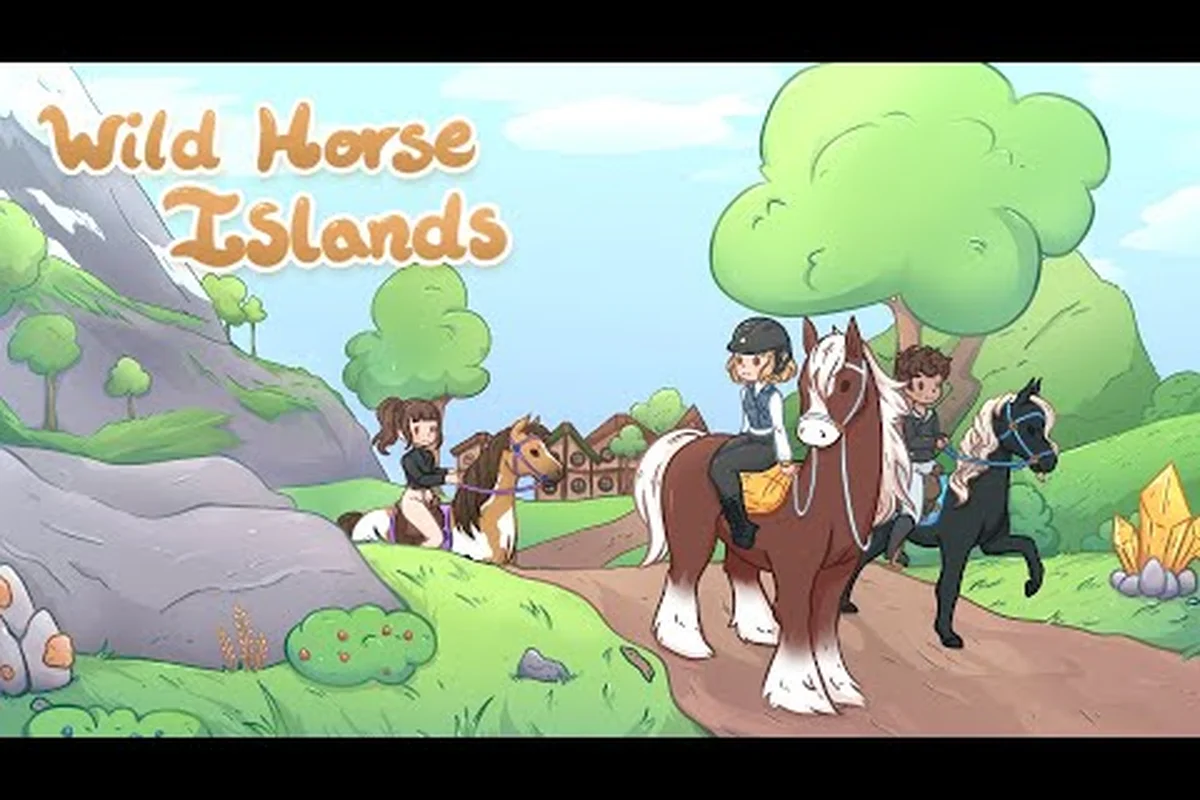
The official trailer on the Wild Horse Islands YouTube channel gives you a quick visual sense of the game's aesthetic and tone. The art style is bright and stylized, which fits the tropical island setting well, and the horses animate smoothly enough that riding feels satisfying rather than clunky.
Advanced Gameplay Tips for Faster Progression
Pinehaven's Starter Economy: Selling Extra Horses vs. Resources
New players on Pinehaven can earn their first coins by selling surplus horses or gathered resources, but the two income streams scale very differently. Selling a freshly tamed common horse typically yields a small, fixed payout, while selling resources like apples or sticks provides a steadier trickle that requires no taming cooldown. For the first hour, prioritize resource gathering over repeated taming—you can catch and sell 2-3 horses in the time it takes to fill your inventory with sellable forage, making resource grinding roughly 1.5x more efficient per minute for early-game coin accumulation.
Training Stat Allocation: Speed vs. Stamina for Racing
When training a horse for the Racing tag, stat allocation determines your competitive ceiling. Speed stats win short sprints, but stamina governs how long you can sustain a gallop across longer courses—a horse with 10 Speed and 5 Stamina will lose to a balanced 8/8 build on any track exceeding 30 seconds. For the early game, invest training points evenly until both stats reach 7, then pivot to Speed for racing or Stamina for island exploration. This 8/8 baseline ensures you can complete Pinehaven's introductory races without gassing out mid-course.
| Video | Author | Duration | Release/Validation | Content Focus |
|---|---|---|---|---|
| Wild Horse Islands - Trailer | Wild Horse Islands | 0:47 | Validated 2026-08-15 | Official game trailer |
| BEGINNERS GUIDE TO WILD HORSE ISLANDS - Pinehaven | Abigail Pinehaven | 15:00 | Validated 2026-08-15 | Starter island tutorial, taming & training systems |
Once you understand the basics of Wild Horse Islands gameplay, the next step is optimizing your play style to progress faster. The game does not hold your hand much beyond the first few minutes, so most players figure out efficiency tricks through trial and error — or by reading community guides. Here are the strategies that experienced players consistently recommend.
The most important tip is to focus on stamina management during taming. Every wild horse has a stress meter that fills when you approach too quickly, and if it maxes out, the horse bolts and you have to track it down again. The trick is to approach slowly, stop moving entirely when the horse looks at you, and only advance when it lowers its head. This takes patience, but it dramatically reduces the number of failed tames.
Another key strategy is to prioritize island unlocks in the right order. Each island costs money to unlock, and the prices scale up significantly. New players often waste money unlocking islands they cannot afford to travel to regularly, when they should be saving for the islands with the best coat spawns for their goals. The early game guide covers this in more detail, but the short version is: unlock the island that matches your target coat type first, not the cheapest one.
Prioritize breeding for stats over coat colors early on—a horse with max speed and stamina will carry you through island races far better than a rare coat pattern. Focus on catching horses with high base stats on the lower-tier islands first, then use the breeding cooldown timers strategically to produce foals with inherited stat boosts. Also, always keep your energy bar topped off with carrots before entering a race, since a single stamina deficit can cost you the win and valuable reputation points needed to unlock the next island's unique horse breed.
-
Breed early, breed often — Even low-tier horses can produce valuable foals if they have complementary traits. Do not wait until you have "perfect" horses to start breeding.
-
Sell duplicates immediately — If you catch a horse that is identical or worse than one you already own, sell it at the auction house rather than hoarding it. Inventory space is limited.
-
Train while traveling — When you ride between islands, your horse gains experience. Make sure you are always riding your lowest-level horse to maximize passive training.
-
Learn coat values — Spend time in trading chat observing what people pay for different coats. This knowledge pays off when you are deciding whether to keep or sell a catch.
-
Join the official community — The official Wild Horse Islands website links to the help center and community resources, which are invaluable for staying current on updates and values.
The auction house is where you will spend most of your time if you want to build wealth. Listing horses at slightly below market value moves them fast, which is often better than holding out for a higher price that never comes. Community data suggests that volume trading — listing many horses at fair prices — generates more income than trying to hit home runs with rare coats.
Frequently Asked Questions
Is Wild Horse Islands gameplay free on all devices?
Yes, Wild Horse Islands is free to play on PC, mobile, and console through Roblox. The core experience — catching, training, breeding, and trading horses — has no paywall. Optional Robux purchases exist for cosmetics and convenience items, but they are not required to progress or enjoy the full game.
What are the most important Wild Horse Islands controls to learn first?
The essential controls are the interact key (E on PC) for mounting and feeding, the sprint key (Left Shift) for galloping, and the camera controls for spotting wild horses. Mastering the taming interaction — which requires holding the interact button while managing your approach speed — is the most important skill for new players.
How long does it take to get a rare horse in Wild Horse Islands?
Rare coat spawns are random, so there is no fixed timeline. Community reports suggest that dedicated players can find a rare coat within a few hours of targeted searching, while others may go days without seeing one. Breeding increases your odds of producing rare coats, which is why many experienced players focus on breeding rather than wild hunting.
Can I play Wild Horse Islands gameplay without spending Robux?
Absolutely. The free-to-play experience includes every core mechanic, and you can access all islands, catch all wild coats, breed, trade, and race without spending anything. Robux purchases are limited to cosmetic items, gamepasses that boost XP gain, and convenience features — none of which are required for progression.
What makes Wild Horse Islands gameplay different from other horse games on Roblox?
The combination of a sophisticated coat genetics system, an active player-driven trading economy, and regular content updates sets it apart. Most horse games on Roblox offer one or two of these features, but Wild Horse Islands delivers all three at a quality level that has kept it popular since 2021.