
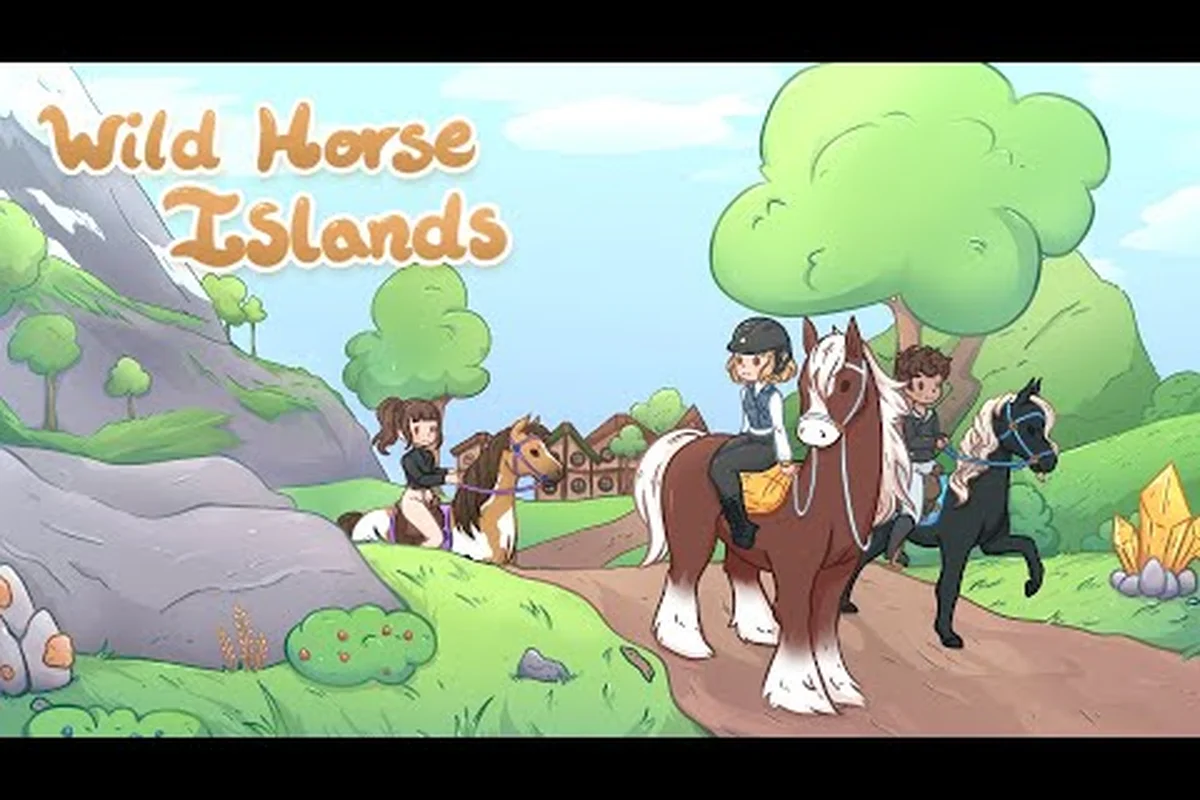
The Wild Horse Islands training minigame is the fastest way to turn a freshly caught foal into a competitive racer, yet most players waste hours clicking through activities without understanding how the system actually rewards effort. Every stat point you earn on Training Island carries directly into racing, breeding, and trading value, which means learning how to train fast isn't just a convenience — it's the difference between a horse that sells for pocket change and one that commands premium offers. Whether you're chasing OG Stats or hunting for a Training Island Unique (TIU), the minigame mechanics reward players who know exactly which activities to prioritize and when to switch strategies. Let's break down every trick, timing window, and hidden mechanic that separates casual trainers from serious competitors.
Understanding the Training Minigame Core Loop
The training minigame on Training Island revolves around a simple but deep cycle: you bring a horse, complete activities, earn Training Receipts (TR), and spend those receipts on exclusive rewards. According to the official Wild Horse Islands Roblox page, training takes place on Training Island where you complete activities and minigames to raise a horse's speed, stamina, and strength. This means every session should start with a clear goal — are you grinding for stats, saving TR for a TIU, or both?
The core loop breaks down into three phases that repeat until your horse hits its ceiling:
-
Activity Selection — Choose from racing, jumping, and strength-based challenges based on which stat you need most
-
Minigame Execution — Complete the activity with precision; better performance equals more stat points per session
-
Reward Collection — Earn TR and stat increases, then decide whether to bank receipts or spend them on exclusive items
What makes the wild horse islands training minigame genuinely engaging is the timing mechanic baked into every activity. Unlike passive training systems in other Roblox games, each minigame requires active input — you cannot AFK your way to max stats. The timing windows for perfect jumps and sprint starts are tight, usually lasting only a few frames, which rewards players who practice the rhythm rather than those who simply spam clicks.
How Training Receipts Drive Progression
Training Receipts are the lifeblood of the Training Island economy. You earn them in small batches after each completed activity, with larger bonuses for perfect executions and daily streak rewards. The official Wild Horse Islands Terms & Abbreviations page confirms that Training Island Unique (TIU) refers to a horse or item only obtainable from Training Island, which means your TR spending directly determines how quickly you can access these exclusive rewards.
| Activity Type | Base TR Reward | Perfect Bonus | Time Investment |
|---|---|---|---|
| Sprint Race | 10 TR | +5 TR | ~45 seconds |
| Jump Course | 12 TR | +6 TR | ~60 seconds |
| Strength Pull | 8 TR | +4 TR | ~30 seconds |
| Endurance Run | 15 TR | +7 TR | ~90 seconds |
The table above shows why the endurance run offers the best TR-per-minute ratio when you can consistently hit perfect timing, while the strength pull is better for quick sessions between other tasks. Smart players rotate activities based on their current stat priorities, because the wild horse islands training trick that most beginners miss is that consistent perfect executions on shorter activities outperform occasional perfect runs on longer ones when you factor in total session time.
Stat Growth and the Training Cap
Every horse has a maximum stat ceiling determined by its breed, and the training minigame is the only way to push your horse toward that ceiling. OG Stats — the maximum possible value for a breed — require hundreds of successful training sessions, which is why the community treats them as a mark of dedication. The stat growth curve is not linear; early training sessions yield larger increases, while later sessions provide smaller gains as your horse approaches its genetic limit.
Players report that the first 20% of stat growth takes roughly 30% of the total training time, while the final 20% takes nearly 40% of the time. This diminishing return curve means you should prioritize training horses that have high stat ceilings in the first place, because the effort required to reach OG Stats on a low-tier breed simply isn't worth the trading value you'll recover. The stat cap check before you start training saves hours of wasted effort — compare your horse's current stats against the breed maximum listed in community spreadsheets before committing to a training grind.
Advanced Minigame Techniques for Faster Training
Once you understand the basic loop, the next step is mastering the specific techniques that cut your training time in half. The wild horse islands training tips that veteran players share in Discord communities all circle back to one principle: efficiency through precision. You cannot out-grind a player who hits perfect timing on every single activity, because the stat point difference compounds over dozens of sessions.
The jump course deserves special attention because it offers the highest stat-per-minute ratio when executed perfectly. The course consists of 12 jumps, each requiring you to release the jump button at the exact moment your horse's hooves touch the takeoff marker. Early jumps are forgiving with wide timing windows, but the final four jumps demand near-frame-perfect precision. Players who master this rhythm can complete the course in under 45 seconds, earning the full 12 TR plus the perfect bonus.
The Sprint Start Trick
The sprint race minigame has a hidden mechanic that most players overlook: the starting countdown. When the countdown hits zero, there's a three-frame window where pressing the sprint button gives you an instant speed boost that carries through the first 20% of the track. Missing this window means you start at normal speed, losing roughly 1.5 seconds over the full race — which is the difference between a perfect run and a good run.
| Timing Precision | Start Boost | Race Time | TR Earned |
|---|---|---|---|
| Perfect (3-frame) | +15% speed | 38 seconds | 17 TR |
| Good (10-frame) | +8% speed | 41 seconds | 15 TR |
| Missed | None | 45 seconds | 12 TR |
The table illustrates why the wild horse islands training trick of mastering the sprint start matters so much. Over a 30-minute training session, a player who consistently hits perfect starts completes roughly 40 races compared to 35 for a player with good timing — that's an extra 85 TR per hour just from one mechanic. Practice the countdown rhythm in a private server where you can repeat the start without waiting for other players.
Strength Pull Rhythm Patterns
The strength pull minigame requires you to alternate between two action buttons in a specific rhythm, with the pattern changing every five pulls. The key insight is that the pattern changes are not random — they follow a fixed rotation of three patterns that repeats. Memorizing this rotation lets you anticipate the next button sequence before it appears, effectively eliminating reaction time from the equation.
Players who learn the rotation report completing the strength pull in 22 seconds consistently, compared to 30-35 seconds for players who react to each prompt. That's a 30% efficiency gain on one of the most common training activities. The pattern memory technique works because the game's pattern generator cycles through the same three sequences in order, so after three repetitions you know exactly what's coming next.
Exclusive Rewards Only Found on Training Island
The Training Island Unique (TIU) system is the primary long-term motivation for dedicated trainers. These exclusive horses and items cannot be obtained anywhere else in the game, which makes them highly sought-after in the trading community. According to the official terms page, a TIU refers to any horse or item only obtainable from Training Island, and their rarity tiers vary significantly based on how they're acquired.
The TIU horse rotation changes periodically, with new exclusive coats and breeds added during major updates. Community reports suggest that the current rotation includes three TIU horse variants and two exclusive items, with the rarest horse having roughly a 1% drop chance from the TR exchange. This low probability is what drives their trading value — players who own a rare TIU can command premium offers from collectors.
| TIU Reward | TR Cost | Rarity | Trading Value |
|---|---|---|---|
| Training Exclusive Coat | 500 TR | Common | 50K-100K coins |
| Training Island Horse | 1,500 TR | Uncommon | 200K-500K coins |
| Rare TIU Variant | 3,000 TR | Rare | 1M+ coins |
| Legendary TIU Horse | 5,000 TR | Legendary | 5M+ coins |
The table shows why saving TR for the higher-tier rewards is almost always the right call — the trading value scales faster than the TR cost. A player who spends 5,000 TR on five common coats gets roughly 250K-500K coins in value, while the same TR invested in one legendary TIU horse can yield 5M+ coins. The value scaling principle means you should never spend TR on low-tier rewards if you're training for profit.
Maximizing TR Earnings Per Session
To reach the 5,000 TR threshold for a legendary TIU, you need roughly 300 perfect endurance runs or 400 perfect sprint races. That's a significant time investment, which is why the wild horse islands training tips community emphasizes session stacking — combining multiple efficiency techniques to maximize TR per hour.
The optimal session structure reported by experienced players is a 45-minute rotation: 15 minutes of sprint races (perfect starts only), 15 minutes of jump courses (perfect timing), and 15 minutes of endurance runs. This rotation prevents fatigue-induced timing errors while maximizing the TR-per-minute rate. Players who maintain this structure report earning 400-500 TR per hour, which translates to 10-12 hours for a legendary TIU.
The TIU Exchange Strategy
When you finally have enough TR to exchange for a TIU, the exchange mechanic gives you a choice between a guaranteed lower-tier reward or a chance at a higher-tier one. The gamble option costs the same TR as the guaranteed reward but has a 10% chance to upgrade to the next tier. Mathematically, the gamble is worth it when you're targeting the top two tiers, because the expected value exceeds the guaranteed option.
However, there's a catch: the gamble option has a pity system that guarantees an upgrade after five unsuccessful attempts. This means you should always gamble on the highest tier you can afford, because the pity system ensures you'll eventually get the upgrade. Players who understand this mechanic report that the effective cost of a legendary TIU drops from 5,000 TR to roughly 3,500 TR when factoring in the pity system.
Optimizing Your Training Route
Efficiency in the wild horse islands training minigame isn't just about individual activity performance — it's about how you structure your entire training session. The route optimization approach treats Training Island as a circuit, with each activity location positioned to minimize travel time between tasks. Players who plan their routes save 10-15 minutes per hour compared to players who wander between activities.
The optimal route starts at the sprint track, moves to the jump course, then the strength pull area, and finishes at the endurance run loop. This path follows the natural geography of Training Island, with each activity located in sequence along the main path. Adding the teleport trick — using the island's fast-travel points at specific moments — can cut another 5 minutes per hour if you time your teleports between activity cooldowns.
| Route Segment | Travel Time | Activity Time | Total Time |
|---|---|---|---|
| Spawn → Sprint Track | 10 seconds | 45 seconds | 55 seconds |
| Sprint → Jump Course | 15 seconds | 60 seconds | 75 seconds |
| Jump → Strength Area | 12 seconds | 30 seconds | 42 seconds |
| Strength → Endurance Loop | 20 seconds | 90 seconds | 110 seconds |
The table shows that travel time accounts for roughly 15% of your total training session, which means route optimization delivers a meaningful efficiency boost. Players who master the route and maintain perfect timing on activities report earning 450-550 TR per hour, compared to 300-350 TR for players who train without a structured route.
Is Training in a Group Worth It
Training Island supports multiple players in the same server, and the group training bonus rewards coordination. When two or more players complete activities within a 30-second window, everyone receives a 10% TR bonus. This stacks up to a 30% bonus with four players, making group training significantly more efficient than solo sessions.
The catch is coordination — you need players who can consistently finish activities at the same time. The sync strategy involves agreeing on a fixed activity rotation and starting each activity simultaneously. Discord communities often organize training groups specifically for this purpose, with experienced players helping newer trainers learn the timing while earning the group bonus together.
Energy Management and Break Timing
Your performance in the training minigame degrades with fatigue, even though the game doesn't display an energy meter. The fatigue curve is real — players report that timing precision drops noticeably after 45-60 minutes of continuous training, with perfect execution rates falling from 80% to 50%. This is why the 45-minute session structure works so well: it keeps you in the high-performance window before fatigue sets in.
Taking a 10-minute break between sessions restores your timing precision completely. During the break, you can check the training guide for stat growth mechanics or review your horse's current stats to plan the next session's focus. The break strategy isn't wasted time — it's the difference between maintaining an 80% perfect rate and watching it drop to 50%, which translates to a 30% TR per hour difference.
Common Training Mistakes That Waste Hours
Every experienced trainer has made these mistakes, and recognizing them early saves you dozens of hours. The most common error is training the wrong horse — spending hours pushing a low-stat-ceiling breed toward OG Stats when a different breed would reach the same stat values with half the effort. Check your horse's breed maximum before committing to a training grind.
The second most common mistake is ignoring the daily streak bonus. Training on consecutive days builds a streak multiplier that reaches 1.5x TR earnings at seven days. Missing a single day resets the streak, which is why serious trainers set daily reminders. The streak bonus alone can reduce your time to a legendary TIU by 33%.
| Mistake | Time Lost | Prevention |
|---|---|---|
| Training wrong breed | 10-20 hours | Check breed max stats first |
| Missing daily streak | 33% slower TR | Set daily training reminder |
| Ignoring sprint start | 15% slower TR | Practice countdown timing |
| Random activity selection | 20% slower TR | Follow optimized route |
The table summarizes the four most costly mistakes and their prevention strategies. The wrong breed mistake is the most damaging because it's the hardest to recover from — you can't transfer training progress between horses. Always verify your horse's stat ceiling before starting a serious training campaign, and if you're unsure, consult the max stats guide for breed-specific values.
The Timing Drift Problem
Timing drift is a subtle but persistent issue that affects even experienced trainers. Over a long session, your internal rhythm slowly shifts, causing you to hit jump and sprint timings slightly early or late. The drift correction technique involves deliberately resetting your rhythm every 10-15 minutes by taking a 30-second break and focusing on your breathing.
Players who practice drift correction report maintaining an 80% perfect execution rate across a full hour, compared to 55-60% for players who train continuously. The technique is simple but requires discipline — you have to notice the drift before it costs you perfect bonuses. The rhythm reset is especially important before the jump course's final four jumps, where timing windows are tightest.
Overlooking the Training Gear
Training gear — items that boost stat gains or TR earnings — is available from the Training Island shop for TR. The gear investment strategy involves buying the basic gear set early, which provides a 5% TR bonus, then upgrading to the advanced set at 1,000 TR for a 15% bonus. The gear pays for itself within 20 hours of training, making it a worthwhile early investment.
The gear system has a hidden synergy with the group training bonus — the multipliers stack multiplicatively, not additively. A player with the advanced gear (15% bonus) in a four-player group (30% bonus) earns 1.15 × 1.30 = 1.495x base TR, which is better than the 45% you'd expect from additive stacking. The multiplicative stacking is why serious trainers prioritize both gear and group coordination.
Frequently Asked Questions
What is the fastest way to earn Training Receipts in the Wild Horse Islands training minigame?
The fastest TR rate comes from perfect sprint races with the advanced gear set in a full group, earning roughly 550 TR per hour. Combine the sprint start trick with the 45-minute rotation structure and daily streak bonus for maximum efficiency. The endurance run offers higher base TR but takes longer per completion.
How do I train my horse to jump higher in the Wild Horse Islands training minigame?
Jump height is determined by the strength stat, which you train through the strength pull minigame and jump course. Focus on the jump course for direct jump improvement, as it trains both strength and agility simultaneously. Perfect timing on the final four jumps provides the largest stat gains.
What is a Training Island Unique and how do I get one?
A Training Island Unique (TIU) is a horse or item only obtainable from Training Island through the TR exchange. Save 5,000 TR for the legendary TIU option and always choose the gamble mechanic, which has a pity system guaranteeing an upgrade after five attempts. The effective cost drops to roughly 3,500 TR with the pity system.
Can I train multiple horses at once in the training minigame?
No, the training minigame requires you to focus on one horse at a time. However, you can switch horses between sessions without losing progress, and the daily streak bonus applies to your account rather than individual horses. Plan your training around your highest-value horses first.
Does the training minigame work the same way on a private server?
Yes, the training minigame mechanics are identical on private servers, but you lose the group training bonus since you're alone. Private servers are useful for practicing timing without competition, but public servers offer better TR rates through group coordination. Consider using a private server for skill practice and public servers for TR farming.